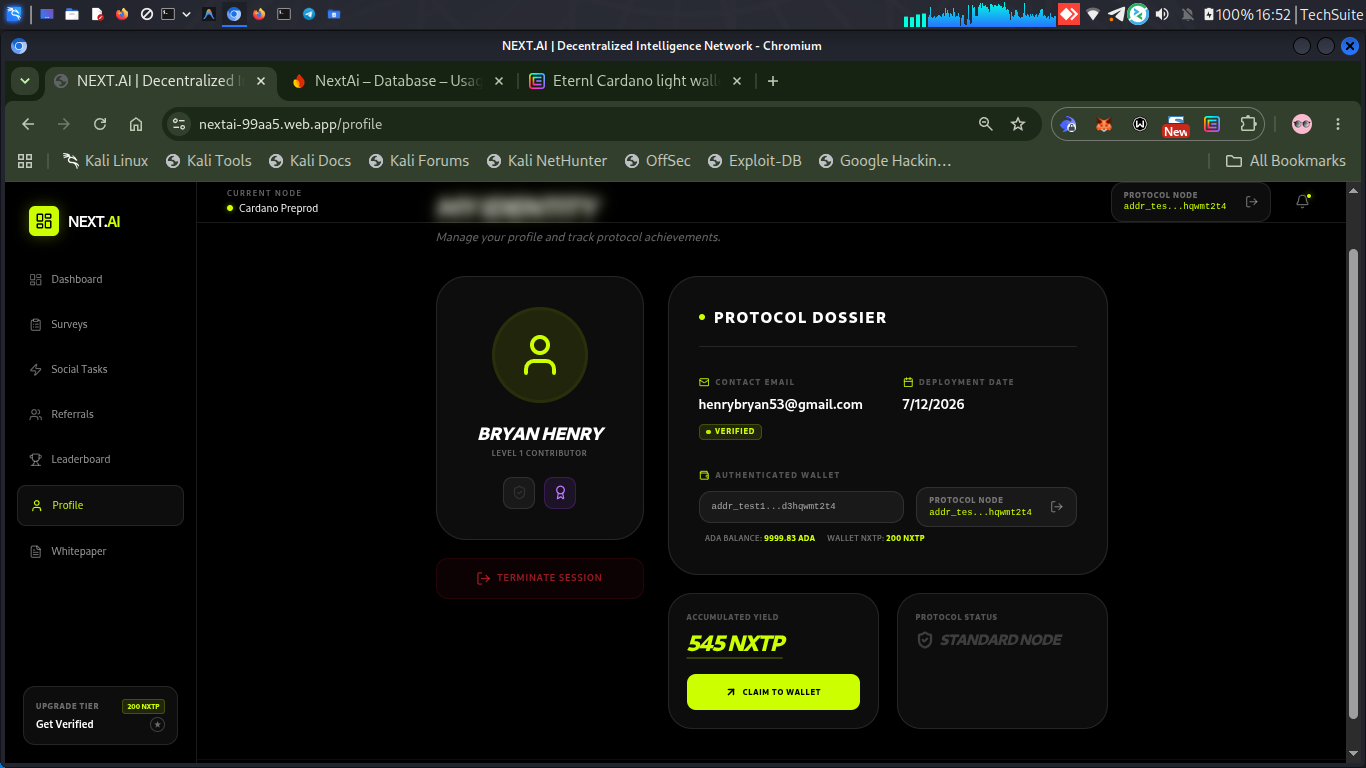
NEXT.AI—a decentralized intelligence network protocol powered by the Cardano blockchain. Originally conceived during the Gimbalabs Piece of Pie Hackathon of 2026, NEXT.AI has grown into a fully functional, Web3-native node validation and data intelligence gateway.
Official Public Repository Link: https://github.com/YungSlaiz53/GNXT.git
Deployed Public Product Link: https://nextai-99aa5.web.app/
Primary X Posting Account: DeFi_SaiTama @ogleksb
Team Leader(Manager/Owner): OGLEKWU BLESSED DAVID
Team Member(Developer/collaborator): Henry Daniel
Here is a look under the hood of what it does, how it works, and why we built it.
What is NEXT.AI?
At its core, NEXT.AI transforms users from passive observers into active participants in AI data indexing and model validation.
Instead of tech giants harvesting your data for free, NEXT.AI rewards you for your inputs. Users complete curated surveys and social intelligence missions to earn yield points, which can be claimed directly into their Web3 wallets as NXTP utility tokens on the Cardano blockchain.
For power users, the protocol features an on-chain verification mechanism. By staking/withdrawing 200 NXTP to the protocol treasury, contributors can verify their node and upgrade to a Premium Node, doubling their referral rewards and unlocking exclusive, higher-yielding data tasks.
The Tech Stack: Bridging Web2 Simplicity with Web3 Security
Building a user-friendly Web3 DApp requires smoothing out the friction between decentralized ledger states and instantaneous user actions. Here is how the NEXT.AI architecture is put together:
- Frontend & Design: Built with React, TypeScript, and TailwindCSS, utilizing dynamic micro-animations (Framer Motion) to create a premium, state-of-the-art UI dashboard.
- Backend Services: Firebase Authentication handles fast Google OAuth onboarding, while real-time Firestore database rules synchronize user points, referral trees, and active streaks instantly.
- Cardano Web3 Integration: Built using the
Lucidtransaction builder library, allowing seamless connection to Cardano wallets like Nami and Eternl.
Solving the UX Hard Problems: Native Scripting Workarounds
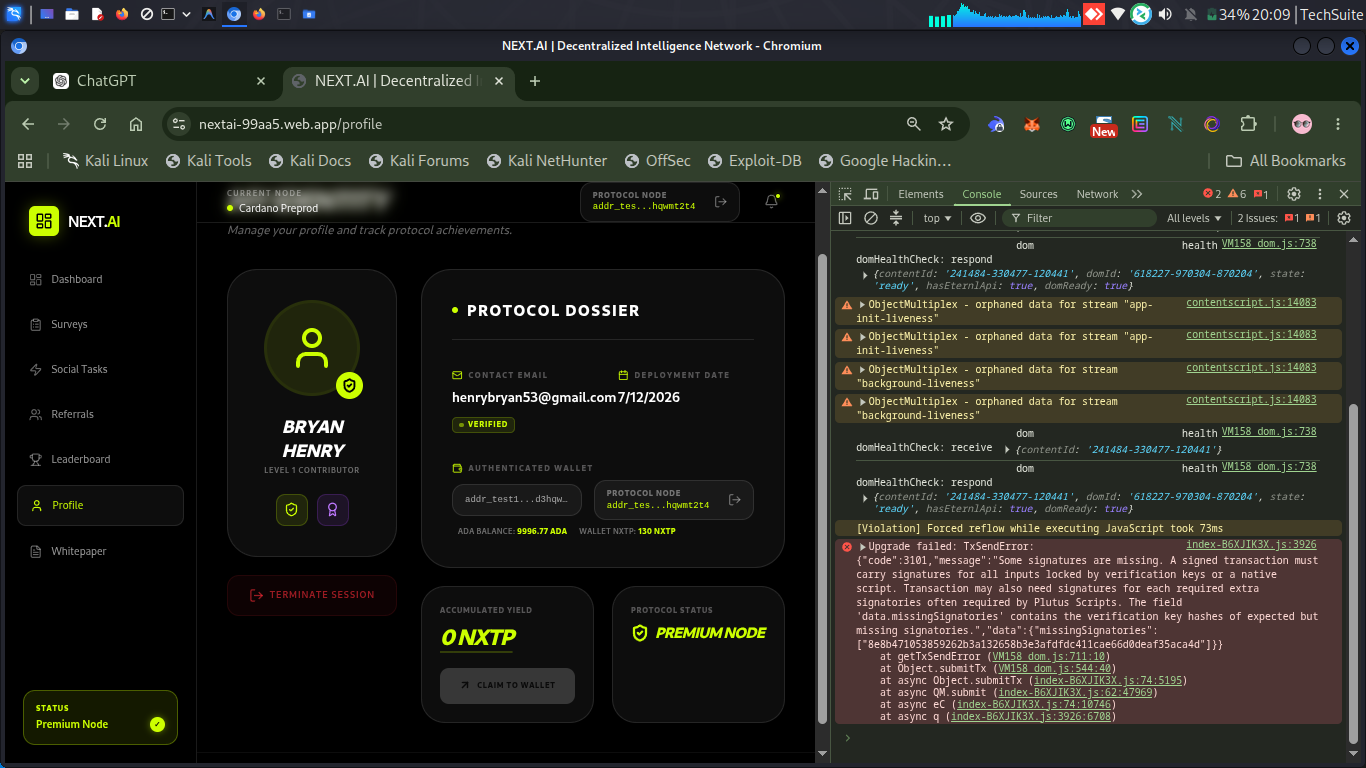
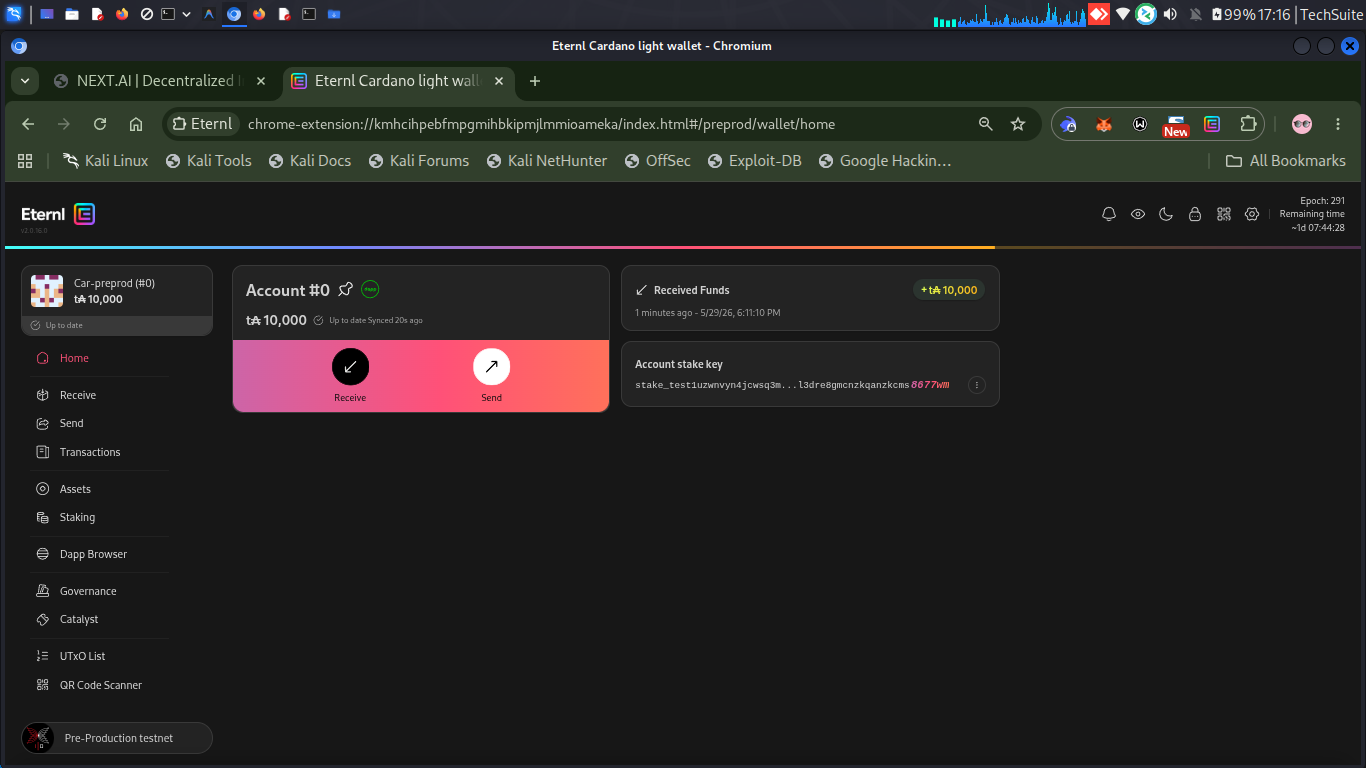
During the final weeks of development, we hit a classic Web3 friction point: browser wallet connector bugs. Specifically, when building token withdrawal and minting flows, wallet extensions like Eternl would often throw missingSignatories errors due to strict key-signing validation.
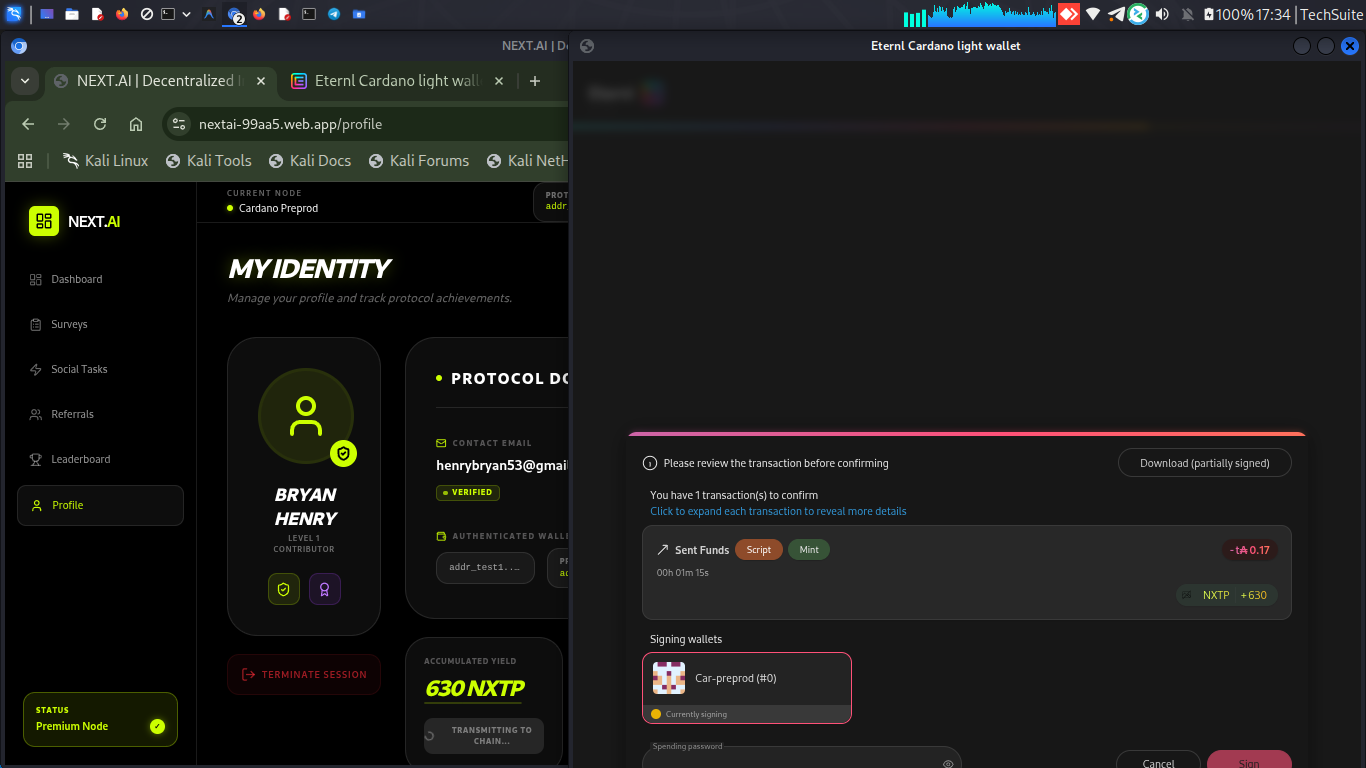
To solve this, I refactored our minting and node-tier upgrade policies from traditional signature-locks (type: "sig") to slot-locked simple native scripts (type: "after"). This approach:
- Solved the required signers mismatch bug in browser connectors.
- Retained a static policy ID for our tokens.
- Provided a zero-friction, click-to-sign experience for the end-user.
Additionally, I integrated a System Settings Manager inside the Admin Gateway. This lets protocol administrators dynamically toggle the active Cardano network between Preprod Testnet and Mainnet, and change the destination Treasury Address on the fly directly via Firestore, removing any need for hardcoded environment variables.
What's Next for NEXT.AI?
With the successful deployment of the dynamic settings rules, full token claim mechanisms, and optimized survey pathways, the core network gateway is fully live and verified at nextai-99aa5.web.app.
As the AI landscape continues to grow, protocols like NEXT.AI will prove that Web3 and artificial intelligence are a natural match. By decentralizing the data pipeline, we ensure that artificial intelligence remains open, transparent, and mutually rewarding.
Comments (1)
Bryan
Jul 28, 2026 at 06:08 PMOk, we got a more on Mainnet does this reflect on cardano.io ?
Leave a Comment